

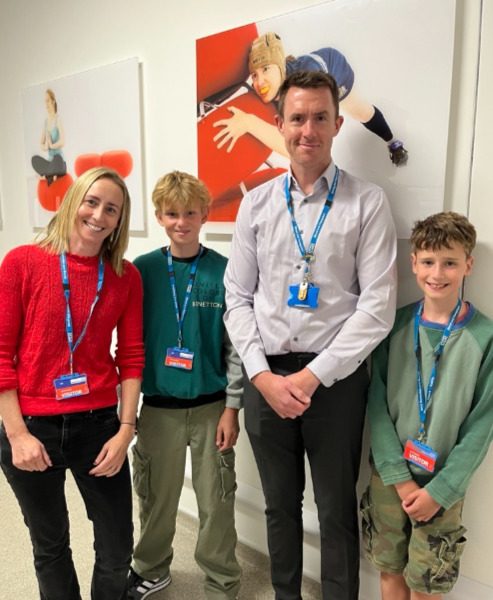
Brothers George and Artie meeting staff at the NHS Blood and Transplant facility in Filton
By Lucy Frost
Two brothers, whose lives depend on plasma derived-medicines, were given a behind-the- scenes look at how donations are transformed into life-saving treatments during a visit to NHS Blood and Transplant’s facility in Filton.
George and his younger brother, Artie, both live with Primary Immunodeficiency, a rare condition affecting the immune system, making it harder for the body to fight infections.
To stay well, both boys receive regular immunoglobulin treatments made from plasma. George receives intravenous immunoglobulin (IVIG) infusions at hospital every four weeks, while Artie receives immunoglobulin treatment at home, also every four weeks.
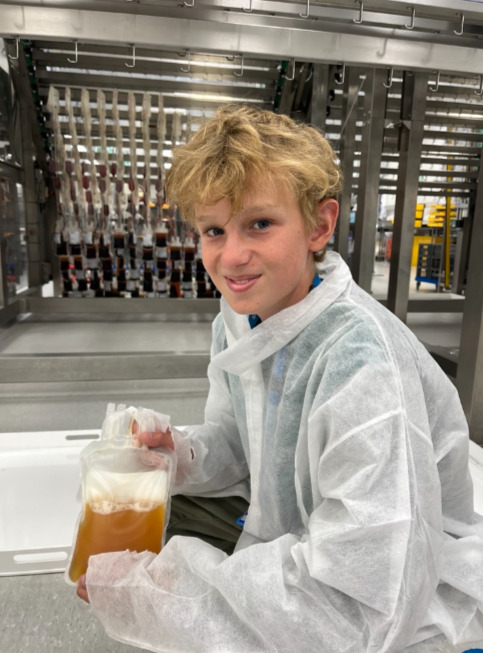
Since George’s diagnosis, he has been a passionate advocate for blood and plasma donation. Last summer the 14-year-old ran 5km every day for 25 days, while encouraging people to sign up as donors. In that time, 32 new donors registered and booked appointments to donate in George’s name.
George said: “I want to help more people understand how important blood and plasma donation is because I know that my treatment wouldn’t be possible without the generosity of blood and plasma donors.”
Before starting immunoglobulin treatment, Artie was often fatigued and lacked the energy to take part in sports and other activities.
Now receiving treatment, Artie has more energy and is able to lead a much more active life. He said: “It was really interesting to see what happens after somebody donates blood and how it eventually becomes a treatment that helps people like me and Artie. I’m very grateful to everyone who donates.”
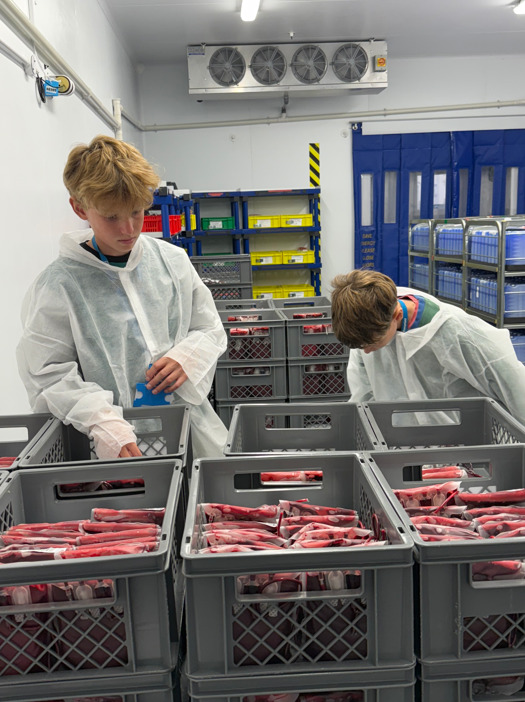
Plasma makes up around 55 per cent of blood and contains antibodies that can be made into medicines used to treat more than 50 conditions.
Russell Rubas, plasma supply performance and efficiency lead at NHS Blood and Transplant, based in Filton, said: “We were delighted to welcome George and Artie to Filton and give them the opportunity to see the remarkable journey plasma and blood donations take before they are manufactured into plasma- derived, reaching thousands of patients across the country.
“For George and Artie to see that process first-hand is especially meaningful because they themselves rely on plasma- derived medicines to stay well.”
For more information about donating blood or plasma, visit: www.blood.co.uk